
Most change doesn’t fail when it’s announced. It fails six weeks later, when the old way of doing things is gone, the new way isn’t working yet, and the team quietly decides to wait it out. I’ve watched it happen in businesses of every size. The announcement was clear, the reasoning was sound, and the leader walked out of the meeting thinking the hard part was over. It wasn’t. Leading through change is mostly about what happens after you’ve said it out loud, and that’s the part most leaders underestimate.
Why Leading Through Change Feels Different From the Top
By the time you announce a change, you’ve usually been living with it for months. You’ve weighed the options, lost sleep over the risks, argued with yourself about timing, and finally made peace with the decision. That process matters. It’s how you got to conviction.
Your team doesn’t get that head start. They hear the news on a Monday morning and begin the same process you went through, starting from zero. They have the same doubts you had and ask the same questions. The difference is that you’ve already answered those questions for yourself and forgotten how long it took.
This is where a lot of leaders misread the room. Slow adoption looks like resistance, so they push harder. But most of the time, people aren’t pushing back. They’re catching up. Treat catching up like defiance and you’ll create the very resistance you were worried about.
Closing that gap starts with the first thing you say.
Explain the Why Before the What
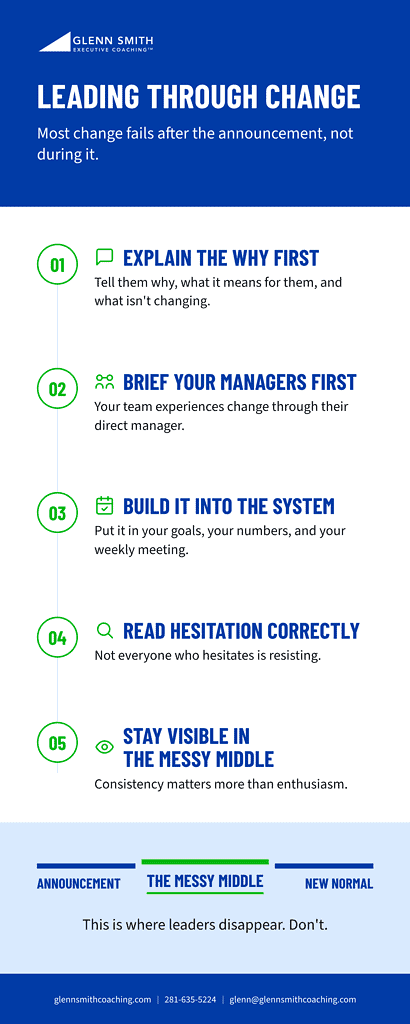
People can handle hard news. What wears them down is guessing. When a change arrives without a clear reason, your team fills in the blanks, and the story they write is almost always worse than the real one.
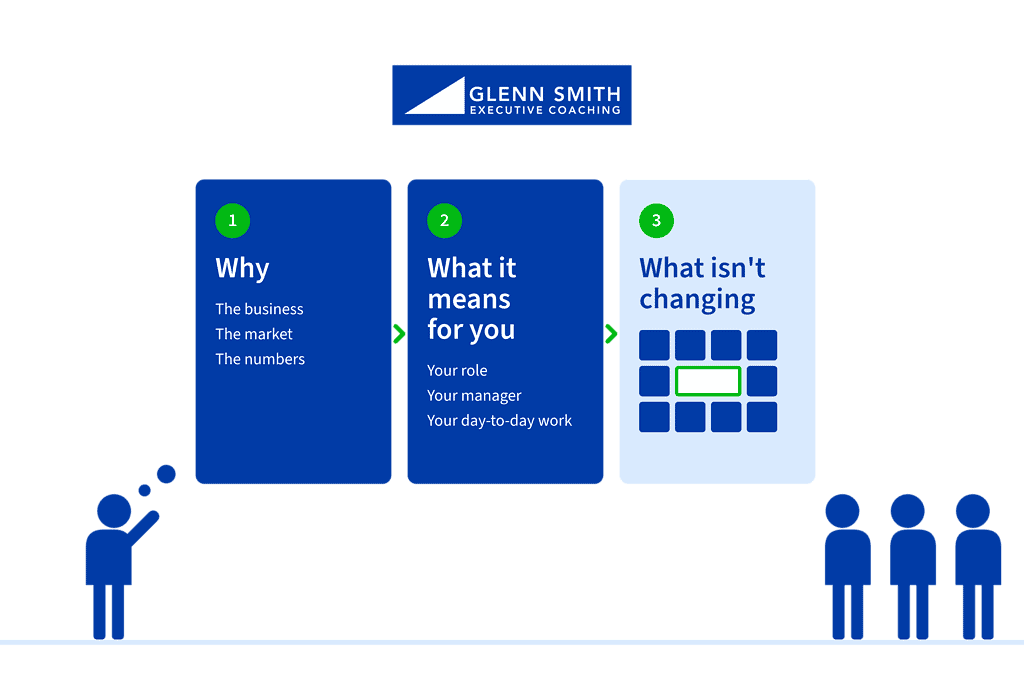
So start with why. What’s happening in the business, the market, or the numbers that made this necessary? Be as specific as you can without breaching confidentiality. “We need to grow” isn’t a reason. “We’ve added customers faster than our structure can handle, and right now every decision runs through three people” is a reason.
Then cover what it means for them: their role, their manager, their day-to-day work. That’s the question every person in the room is actually asking, and until you answer it, they won’t hear much of anything else.
Finally, tell them what isn’t changing. In my experience this is the step leaders skip most often, and it’s one of the most useful. When people know which parts of their work are staying put, the change stops feeling like the ground shifting under everything. It becomes a defined thing with edges, and that’s far easier to adjust to.
Your Managers Carry the Change, Not the Memo
Here’s something executives don’t always want to hear. Most of your employees won’t experience this change through you. They’ll experience it through their direct manager. How that manager talks about it, whether they seem confident or quietly skeptical, and how they handle the hard questions in a one-on-one will shape how the change lands far more than your announcement did.
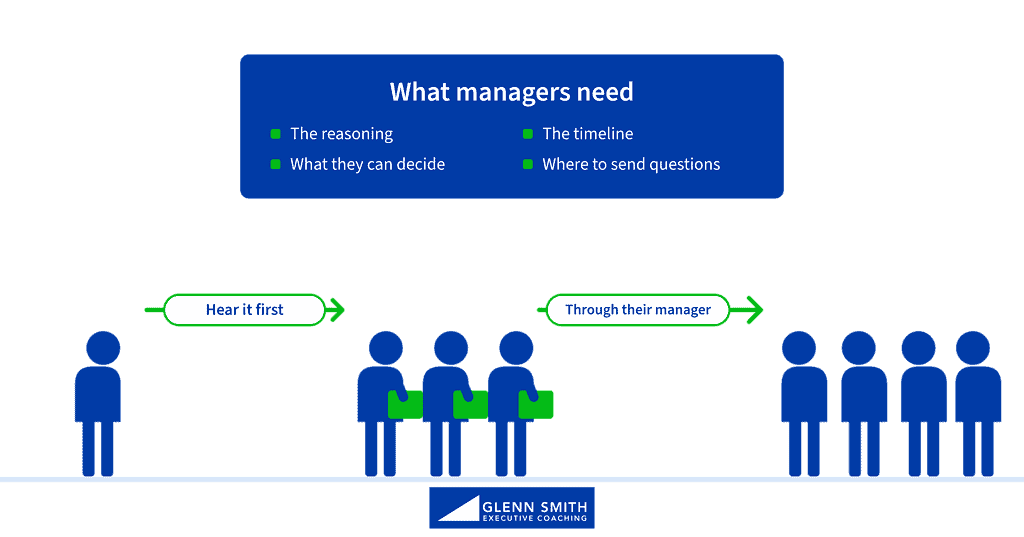
That means your managers need to hear it first. Not five minutes before the all-hands meeting, but early enough to ask their own questions and raise their own concerns. Give them room to push back privately before you ask them to stand behind it publicly. A manager who got to voice doubts in the leadership meeting can defend the decision with a straight face. A manager who was blindsided can’t.
They also need more than talking points. Give them the reasoning, the timeline, what they’re allowed to decide on their own, and where to send the questions they can’t answer. If you’ve ever wondered why managing people is harder than you think, a major change is where that shows up fastest. Your managers are carrying their own uncertainty and their team’s at the same time.
Build the Change Into How the Business Runs
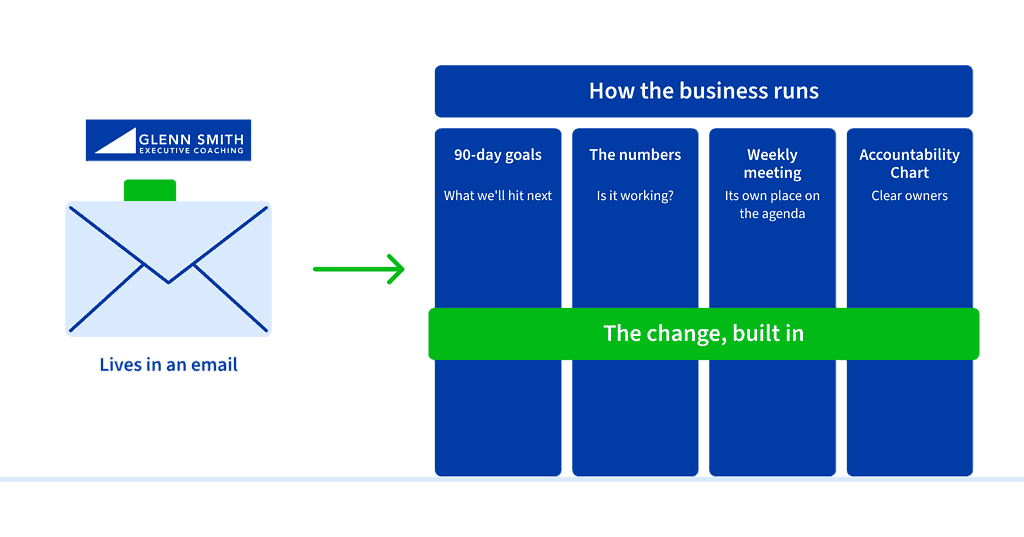
A change that lives in an email dies in an email. A change that shows up in your goals, your numbers, and your weekly meetings has a real chance of sticking. Good leadership through change is as structural as it is personal.
When I work with a company going through a structural shift, I usually start with the management system before I touch the people side. What are the goals for the next 90 days? Which numbers tell us whether the change is working? When does the leadership team meet, and what gets reviewed every time? Those questions sound mechanical, but they’re what turn an announcement into accountability.
The weekly leadership meeting is where this matters most. If the change has its own place on the agenda, with a clear owner and measurable progress, it stays visible. If it only comes up when something breaks, the team learns that it’s optional. People pay attention to what leaders track.
Ownership needs the same clarity. Most organizational changes shift who is responsible for what, even when nobody says so directly. If you haven’t redrawn those lines, two people will each assume the other one has it, and something important will fall through. An updated Accountability Chart makes the new responsibilities visible to everyone, not just the people who were in the room when they were decided.
Not Everyone Resists the Same Way
Once the structure is in place, the people side gets easier to read. It also gets more interesting, because not everyone who hesitates is resisting.
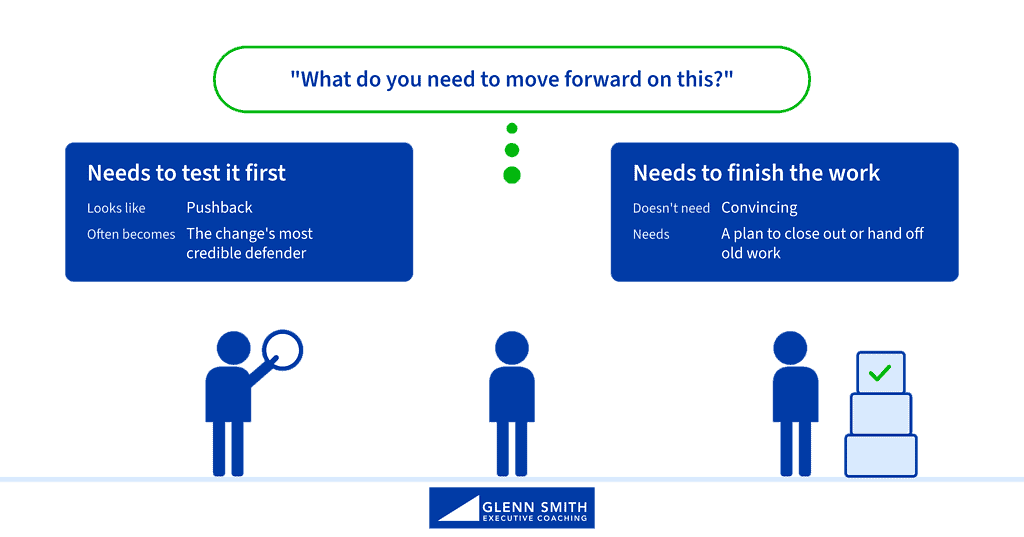
As a certified Working Genius facilitator, I spend a lot of time helping leadership teams understand how different people are wired to contribute. That lens is especially useful during change. Some people naturally need to test an idea against their own judgment before they can commit to it. To a leader in a hurry, that looks like pushback. Often it’s the opposite. Once those people have kicked the tires, they tend to become the change’s most credible defenders.
Others are wired to push work across the finish line. For them, the hard part isn’t the new direction. It’s walking away from what they were in the middle of finishing. They don’t need to be convinced. They need a clear plan for how the old work gets closed out or handed off.
When you treat every hesitation as the same problem, you force the wrong solution on the wrong person and burn trust you’ll need later. Asking “What do you need to move forward on this?” will get you much further than assuming you already know.
Stay Visible in the Messy Middle
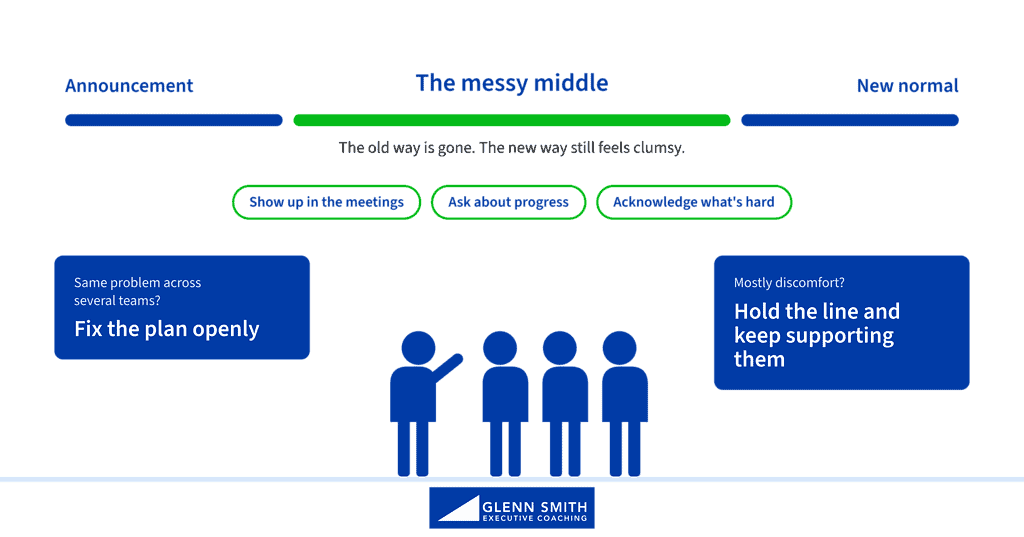
The announcement is the easy part. The stretch that follows, usually the first couple of months, is where many leaders disappear. They’ve moved on to the next priority. The team, meanwhile, is living in the least comfortable phase of any change, where the old way is gone and the new way still feels clumsy. This is the part of leading a team through change that doesn’t show up in any plan.
It’s also when your consistency matters more than your enthusiasm. Your team is watching for signals about whether this is real or whether it will fade like the last initiative did. Show up in the meetings. Ask about progress. Acknowledge what’s hard without backing away from the decision.
You also have to tell the difference between a change that needs adjusting and one that just needs more time. If the same problem keeps surfacing across several teams, the plan may have a flaw, and fixing it openly builds credibility. If the complaints are mostly about discomfort, that’s usually the sound of people learning something new. Hold the line and keep supporting them.
I saw this firsthand during a year-long engagement with a 270-employee oil and gas company working through a leadership transition. What made the difference wasn’t the plan on paper. It was leadership staying visible and consistent month after month, long after the kickoff meeting was forgotten.
Wrapping It Up
Leading through change is less about the moment you announce it and more about the months you spend backing it up. Explain the why, prepare your managers first, build the change into how the business runs, and stay present when it gets uncomfortable. That’s how a decision becomes the way things work.
Planning a Change? Talk It Through First
If you’re about to announce a significant change, or you announced one a few months ago and it’s stalling, that’s the right time for an outside perspective. I’ve spent 30 years inside businesses working through moments like this and have coached leaders at more than 100 of them. Book a conversation with Glenn Smith and we’ll look at where things stand and what your team needs from you next.

Frequently Asked Questions
How long does it take a team to adjust to organizational change?
It depends on the size of the change and how well it’s supported, but most teams need at least a few months before a new way of working feels normal. Small process changes settle faster. Structural changes, like a new reporting line or a new leadership team, usually take longer, especially if the goals and meetings around them don’t change at the same time.
How do you handle employees who resist change?
Start by figuring out what kind of resistance you’re seeing. Some people need to understand the reasoning, some need to finish what they were working on, and some have a legitimate concern the plan missed. A direct conversation about what they need to move forward will usually tell you which one you’re dealing with.
What should leaders avoid saying when announcing a change?
Avoid vague reassurances like “nothing is really going to change” when something clearly is. People notice, and it costs you credibility. Also avoid presenting a decision as open for input when it’s already final. Be clear about what’s decided and where you genuinely want their ideas.
What is a leader’s role in change management?
The leader sets the direction, explains the reasoning, and makes sure the change is built into goals, meetings, and accountability. Just as important, the leader stays visible after the announcement. Teams take their cues from what leadership pays attention to, so consistency over time matters more than a strong kickoff.
Can an executive coach help a leadership team through change?
Yes. A coach brings an outside perspective to decisions leaders are often too close to see clearly and helps the leadership team stay aligned when pressure builds. Much of my executive coaching for business leaders work happens during exactly these kinds of transitions.